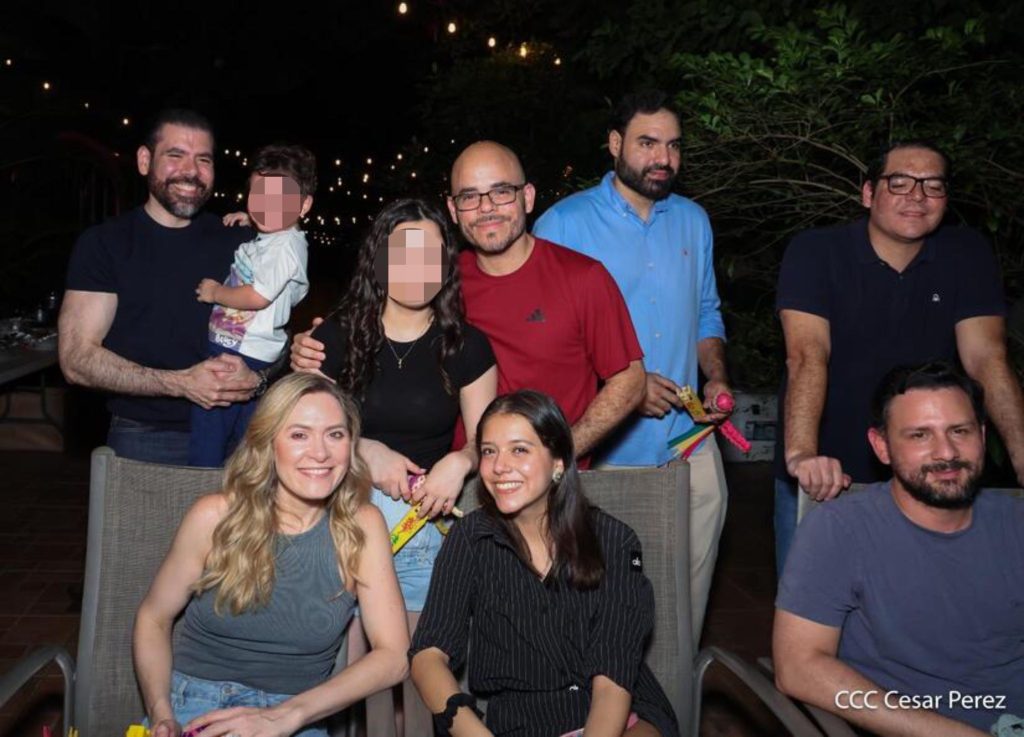
The consolidation of the government’s propaganda apparatus has found its chief operator in Daniel Edmundo Ortega Murillo. Yet he remains firmly in the shadow of Murillo, who exerts tight control over the state’s messaging and institutions. At 46, he has become a central figure in a strategy that blends media training for loyalists, international alliances, narrative control, and the systematic normalization of falsehoods in official discourse.
Over the past six months alone, the pro-government outlet El 19 Digital has published at least 26 reports on meetings, training sessions, and activities involving Ortega Murillo. Taken together, these events point to a deepening alignment between Sandinista communicators and media platforms from China and Russia—two of the regime’s principal international allies.
The Ortega-Murillo government recently marked 19 years in power amid an unrelenting crackdown on opposition figures and civil society, justified under the banner of “defending sovereignty.” This narrative has become a cornerstone of state and party messaging—now fused into a single structure—used to justify the violent repression unleashed since 2018.
In official documents, Daniel Edmundo is described as “Media Coordinator of the Communication and Citizenship Council,” a title once held exclusively by his mother since the family returned to power in 2007. The “media” under this umbrella include the state-run Channel 6 and a network of privately owned outlets controlled by relatives or proxies, such as Channels 2, 4, 8, 13, and 22—illustrating the tight interweaving of family, business, and state power.
Family Roles in a Concentrated Power Structure
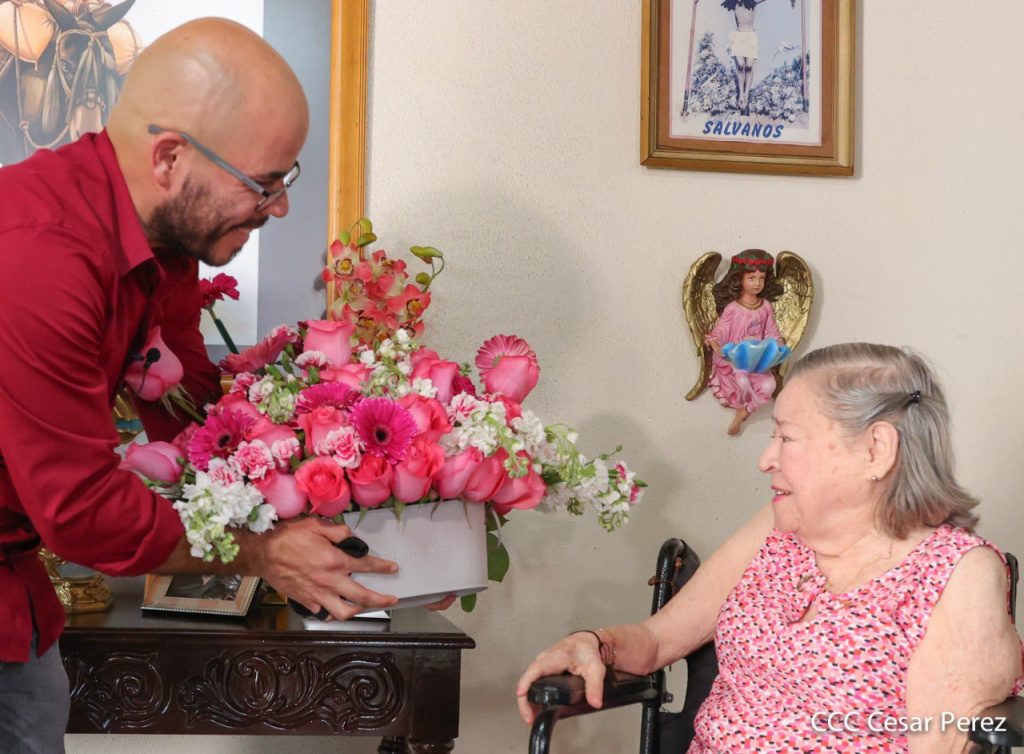
A trained sociologist educated in Spain, Ortega Murillo spent years away from the spotlight. But in recent years, Murillo has delegated spheres of influence to her children: Maurice Ortega Murillo oversees sports; Laureano Ortega Murillo handles investment and is widely seen as a potential heir; Camila Ortega Murillo leads “creative economy” initiatives while assisting her mother at official events; and Rafael Ortega Murillo, the eldest, has long managed the family’s business interests.
Daniel Edmundo’s rise began in 2022, as the family’s media focus shifted away from his brother Juan Carlos. Since then, his presence has steadily grown.
A defining feature of his role is an openly confrontational stance toward independent media. He aligns closely with state-led persecution that has forced at least 309 journalists and media workers into exile—one of the largest such displacements in the region.
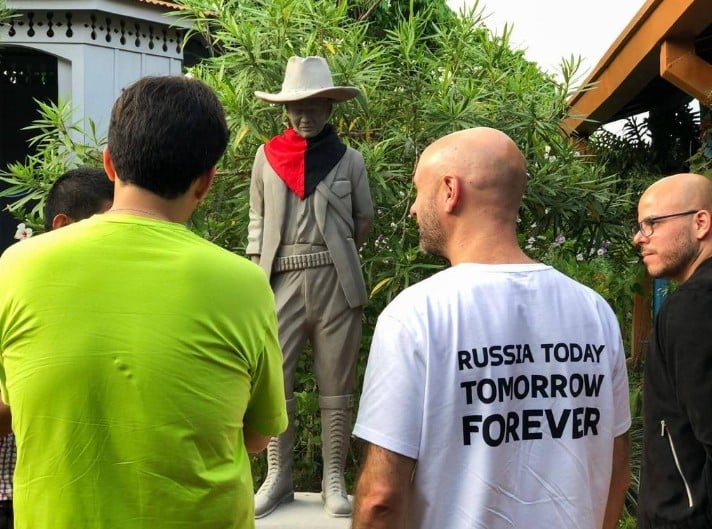
Beyond rhetoric, he is active in audiovisual production and frequently participates in events tied to Russian and Chinese counterparts. He has also toured various parts of the country under heavy security, including a 2025 visit to Nicaragua’s long-neglected Caribbean coast.
Russian and Chinese Propaganda Networks
Independent analysts have told LA PRENSA that the Ortega-Murillo regime deploys its entire communications apparatus—backed by China and Russia—to spread disinformation and enforce a single narrative, while repression ensures its grip on power.
You may be interested: Nicaragua at the Center of Russia’s Growing Disinformation Strategy in Latin America
Alongside corruption, the government relies on political violence and systematic falsehoods to project an image of stability. Official messaging claims the country is stable and that the 2018 crisis was caused by “traitors” and “foreign interference.” In reality, the unrest followed mass civic protests demanding the resignation of Ortega and Murillo—demands met with a brutal state response.
Techniques of Narrative Manipulation
A recent report by the Digital News Association (DNA) found that Russia has trained more than 1,000 content creators, journalists, and influencers across at least eight Latin American countries, including Nicaragua, with the aim of amplifying pro-Kremlin narratives.
According to the study, these actors operate in coordination with platforms such as RT en Español and Sputnik Mundo, forming an ecosystem that not only disseminates information but actively shapes public perception. Identified tactics include “narrative laundering” around conflicts such as the war in Ukraine, emotional manipulation, selective presentation of facts, conspiracy theories, and the amplification of extreme viewpoints.
Using artificial intelligence tools, the investigation also identified at least 16 websites created by Russian actors to mimic legitimate news outlets, mislead audiences, and amplify aligned messaging.
Media Control and Ideological Alignment
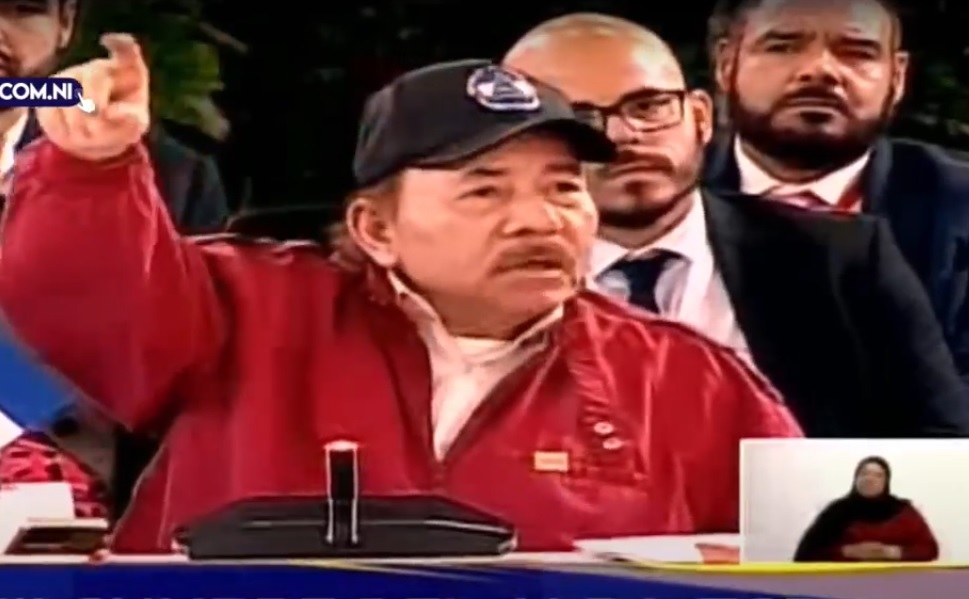
In public appearances before Sandinista supporters, Ortega Murillo maintains a restrained expression and rigid posture, often keeping a noticeable distance from those around him. Like his siblings—but particularly given his role in media—he closely adheres to Murillo’s. He frequently repeats phrases such as “the true truth,” “defending peace and stability,” and the concept of the “People as President”—all hallmarks of his mother’s political script.
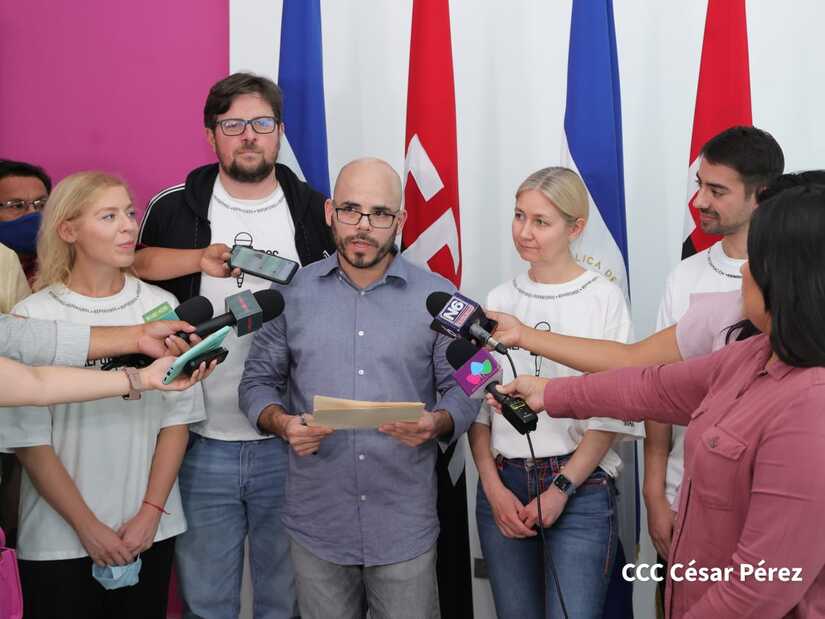
Another key aspect of his work is training party loyalists. On March 12, for example, he met with communications students at the National Autonomous University of Nicaragua (UNAN-Managua), where they attended a workshop titled “The Use of Artificial Intelligence in Communication Work.”
There, he acted as a chief propagandist, promoting coordination among pro-government media, state institutions, universities, and youth organizations. His messaging is primarily directed at “citizen power” media outlets, the Sandinista Youth movement, and state-controlled public universities.
U.S. authorities have taken note of these disinformation efforts. In 2022, the Treasury Department sanctioned Nahima Janett Díaz Flores, head of the telecommunications regulator, for her role in the crackdown on independent media and related campaigns.
You may find it interesting: Ortega-Murillo regime quietly restructures its gold business as U.S. scrutiny intensifies
From “Uncontaminated Information” to Total Censorship
When the Ortega-Murillo family returned to power in 2007, Murillo’s communications strategy emphasized preventing information from being “contaminated”—effectively barring officials from speaking to independent media. Since the 2018 crisis, that approach has escalated into an effort to impose near-total censorship.
A review by LA PRENSA shows that Ortega Murillo’s busiest period came in October and November 2025, when he participated in international exchanges and training programs with Russian and Chinese actors.
These ties have become increasingly significant amid shifting global geopolitics, particularly as U.S. security policy places greater scrutiny on relationships with those powers. Russian engagement tends to focus on high-visibility media and political exchanges, while China’s role emphasizes training, technical cooperation, and digital narratives.
A Lesser-Known Profile
Born on January 30, 1980, shortly after the Sandinista Revolution, Daniel Edmundo is the first biological child of Ortega and Murillo. He was named after Edmundo Pérez, a guerrilla involved in a 1967 killing of an army sergeant in which Ortega also participated.
He later served as director of Channel 4, sharing responsibilities with his brother. Like several of his siblings, he has a strong interest in music—an influence attributed to Murillo’s longstanding ties to Nicaragua’s cultural sector.
According to official records, he earned a sociology degree from the Central American University (UCA) in 2002—an institution later seized by the government and repurposed under state control.
His wife, Mara Vanessa Stotti, has served as co-director of the Nicaraguan Tourism Institute (INTUR) since 2024, part of a broader pattern in which family members and their spouses are placed in key government roles—raising persistent concerns over entrenched nepotism.
Escalating Attacks on Independent Media
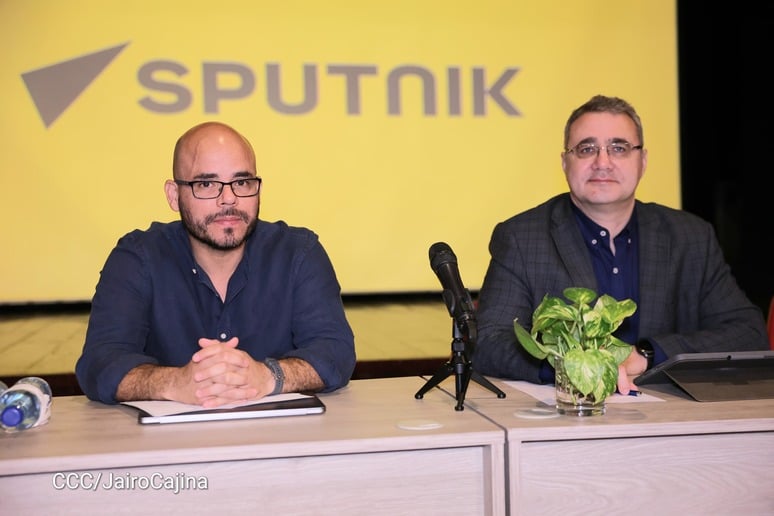
Murillo is widely known for her harsh attacks on critics, including journalists and independent outlets. Her son has echoed that tone. In 2022, while participating in a roundtable organized by Russian state media Sputnik and RT, Ortega Murillo referred to journalists as “mercenaries,” “criminals,” and “traitors.”
At the same event, he defended restrictive legislation such as the Foreign Agents Law and the Special Cybercrimes Law—both enacted in 2020 and used the following year to detain opposition figures, civil society leaders, and business representatives ahead of presidential elections.
Read also: Costa Rica calls Roberto Samcam killing «ideological», probes Nicaraguan regime link
With state control consolidated, electoral competition has been hollowed out, and fear has become a governing tool. Constitutional reforms have further dismantled institutional checks and balances, strengthening a repressive state apparatus and formalizing Murillo’s role as “co-president”—a title created to place her on equal footing with Ortega.
Beyond Ortega Murillo’s reserved demeanor and expanding international ties, what emerges in Nicaragua is a sustained process of information centralization and control. Independent media have effectively been driven out of the country, continuing their work only from exile via digital platforms.
As across the broader state structure, all officials ultimately answer to Murillo. She has even publicly reprimanded subordinates for minor inaccuracies, underscoring an intolerance for error that reflects the rigid discipline of concentrated power.