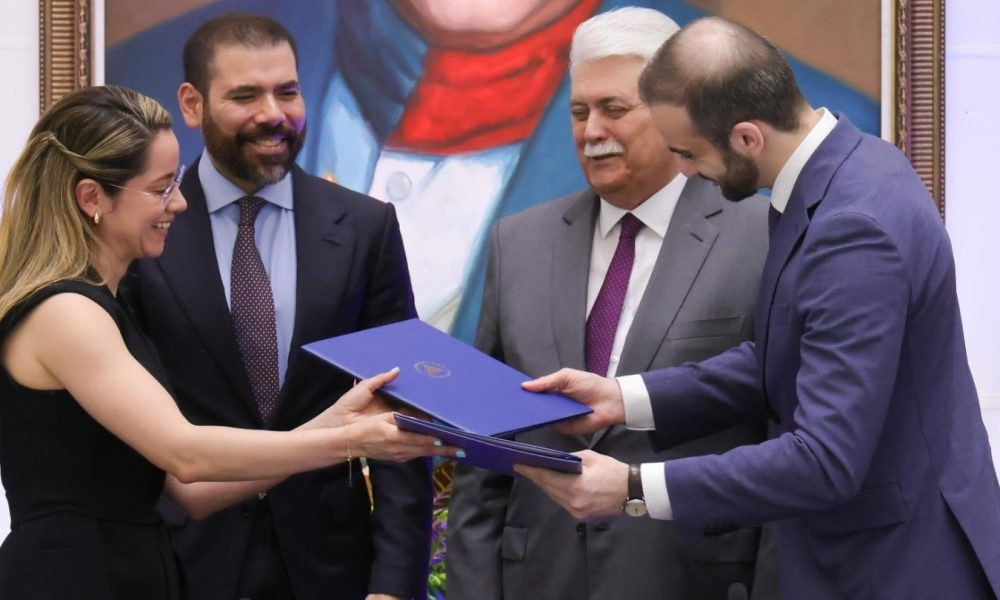
Amid efforts by the U.S. administration to secure a peace agreement between Russia and Ukraine, the regime of Daniel Ortega and Rosario Murillo is strengthening its ties with the Kremlin—this time through the signing of a memorandum on Wednesday, April 23, with the Russian state-owned company Rostelecom Solar, which was sanctioned by the United States in 2023 due to its links to Russia’s invasion of Ukraine. If this alliance is finalized, it would provide the dictatorship with more direct and specialized assistance and training from Russia for digital surveillance and espionage within the country, according to experts consulted by LA PRENSA.
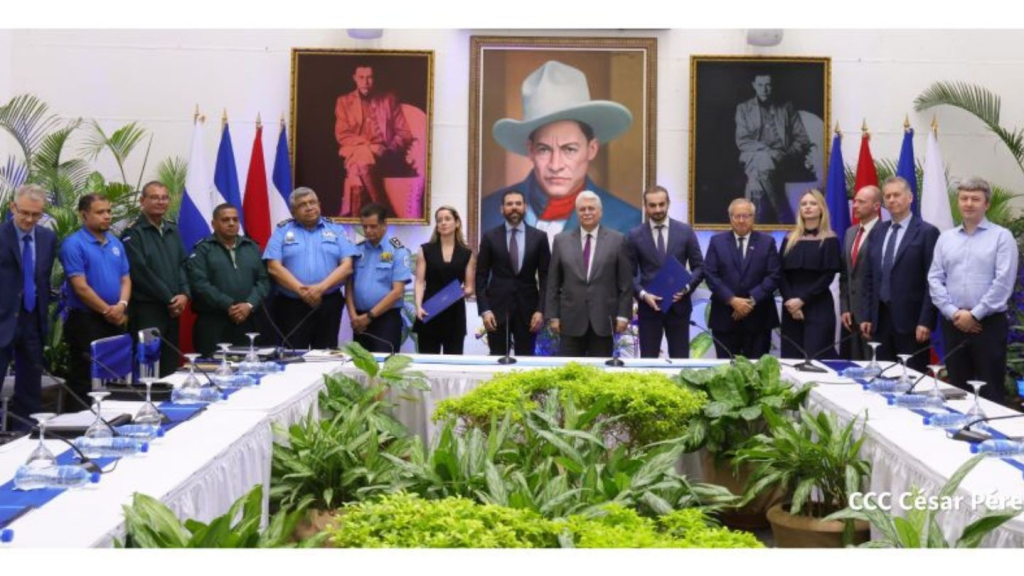
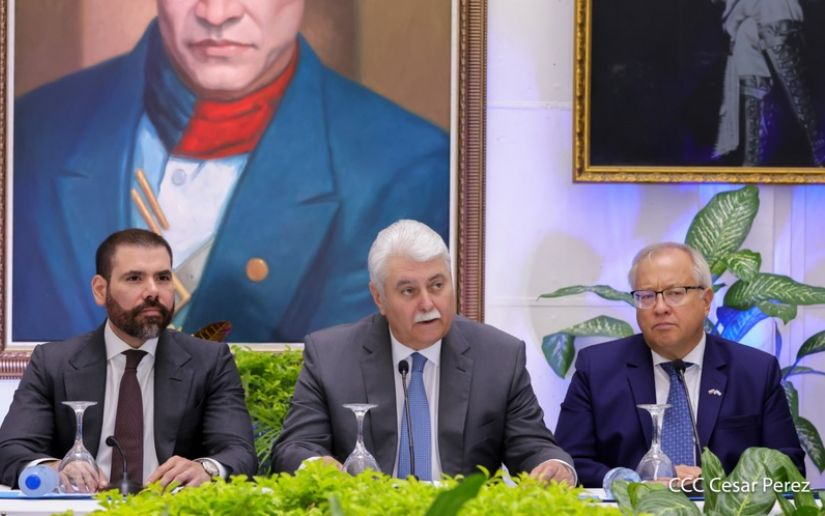
The memorandum—whose full contents have not been made public by the regime—was signed during the second day of meetings between a delegation from Russia’s Security Council and high-ranking officials from Nicaraguan institutions. The talks were led by Laureano Ortega Murillo, son of the ruling couple and adviser for the Promotion of Investments, Trade, and International Cooperation.
During the signing, Oleg Khramov, Deputy Secretary of Russia’s Security Council, stated that both countries are developing their cooperation “on the basis of mutual interest.”
According to Ortega Murillo, the two sessions held with the Russian delegation focused on developing a program to strengthen cooperation with Russia, with the stated goal of ensuring “peace, security, tranquility, and well-being”—terms the regime commonly uses to refer to maintaining the status quo. The program consists of a joint plan on information security and the training of Nicaraguan specialists in this field.
Photographs released by the regime show the presence of two military officials, Deputy Interior Minister Luis Cañas, National Police Chief Francisco Díaz, and his daughter, Nahima Díaz, head of TELCOR (the Nicaraguan Institute of Telecommunications and Postal Services).
What is Rostelecom Solar?
Although delegations from both countries took part in the signing of the agreement, only TELCOR director Nahima Díaz formally signed the memorandum with Rostelecom Solar. Pro-government media outlets did not mention the representative of the company.
The company OOO Solar Security, also known as Rostelecom Solar or RT Solar, was founded in 2015.
The U.S. Department of the Treasury’s Office of Foreign Assets Control (OFAC) sanctioned the company on September 14, 2023, as part of a broader effort to weaken Russia’s technological and military capabilities in its war against Ukraine.
According to the U.S. Treasury Department’s statement, the company was designated under Executive Order 14024 for “operating or having operated in the technology sector of the Russian Federation economy.” This executive order authorizes the U.S. government to sanction individuals or entities involved in key sectors deemed strategic by the Kremlin.
Solar Security, which operates under the names Rostelecom Solar and RT Solar, specializes in cyber threat analysis, intrusion prevention, and cybersecurity system management. It also holds a license from the Federal Security Service (FSB)—one of Russia’s main intelligence agencies—to develop and distribute encryption services.
These technological capabilities, along with the company’s ties to the FSB, make it a key player within the digital ecosystem that supports the Russian government—one of the main reasons it was added to the list of sanctioned entities.
Presence in Latin America
Daniil Chernov, Director of Solar appScreener at Rostelecom Solar, stated in a July 2, 2019 interview that their software security analysis tool had generated interest in international markets, including Latin America.
He highlighted one of the most notable cases as that of GNP Seguros in Mexico, where the technology enabled the implementation of an automated secure development process.
At the time, no deployments had yet been carried out in Colombia, Peru, or Chile; however, Chernov noted that expansion into Latin America was part of Rostelecom Solar’s strategic plans.
However, the think tank Expediente Abierto, which investigates Russian influence in the region, had no prior record of Rostelecom Solar.
“Even pro-government media outlets, which usually amplify this kind of alliance, had not covered it until now,” said Javier Meléndez, director of Expediente Abierto, when consulted on Thursday the 24th.
Meléndez also pointed out that the company has been involved in digital infrastructure and surveillance projects in about 70 countries, especially in Central Asian countries, primarily in collaboration with ministries of the Interior or Defense.
Agreement could be used for espionage purposes
Meléndez does not rule out the possibility that the program announced by the regime and the Russian company aims to increase surveillance and espionage in Nicaragua. The expert mentioned that if this agreement is finalized, unlike previous ones that remained on paper, the presence of Rostelecom Solar could pave the way for the installation of cyber monitoring infrastructure in Nicaragua, potentially with direct technical support from Russia.
“This would involve an exchange of digital intelligence that could include tools for controlling social media, monitoring opponents, and managing strategic data,” stated Meléndez.
According to the latest report from the UN’s Group of Human Rights Experts on Nicaragua (GHREN), presented on April 2 of this year, the regime has implemented an online surveillance system. For example, it mentions that Telcor facilitates the interception of communications without judicial authorization, in collaboration with the Police.
Additionally, a network made up of Telcor, the National Police, the Army, the Ministries of Health and Education, and the territorial structures of the Sandinista National Liberation Front (FSLN) collects and centralizes personal information for repressive purposes.
Russia’s strategies
In Meléndez’s view, alliances with Russian state-owned companies are part of the Kremlin’s strategy to expand its influence in regimes like Nicaragua’s.
«In particular, the nature of this company allows for the establishment of intelligence and monitoring channels under the guise of technological and military cooperation, a dynamic that has already been observed in previous agreements with the National Police and the Nicaraguan Army. This case represents a new example of the pattern we have been documenting. Our database records how Russia has intensified its narrative of strategic friendship with Nicaragua through joint events and constant political gestures of support between Ortega and Putin,» he stated.
According to Meléndez, these approaches by the regime should be closely monitored in the region.
“The presence of this company could pose a threat to regional privacy, expanding surveillance capabilities to citizens or foreign territories. But perhaps the most dangerous aspect is the risk of replicability, as other governments with authoritarian inclinations in the region might seek similar agreements with Russia or companies of this type,” he stated.
Security Council reports directly to Putin
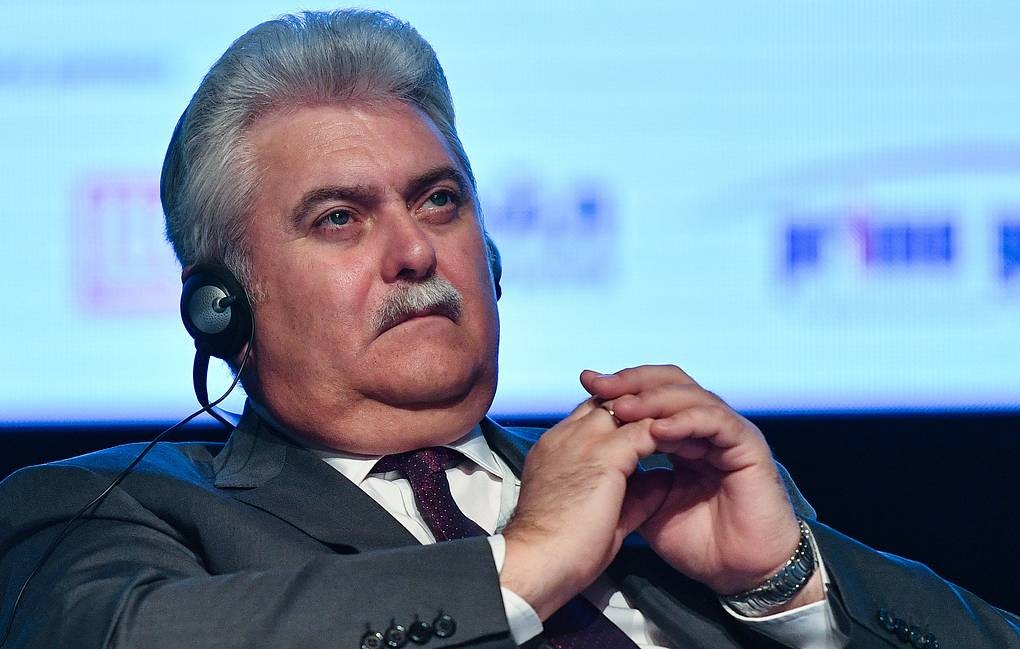
On April 22, the Sandinista regime announced that a delegation from Russia’s Security Council, led by Oleg Khramov, held meetings with Laureano Ortega Murillo. The Russian ambassador to Managua, Mikhail Ledenev, also participated in the meeting.
Khramov stated that the current situation in the information sector “is characterized by a considerable increase in threats” and that, in order to neutralize them, “they must work together, in a coordinated manner, and based on mutual interest.”
The Russian Security Council is an advisory body to President Vladimir Putin that makes decisions on national security and strategic matters. It is composed of high-ranking state officials and heads of security and defense agencies.
For this reason, according to specialists consulted by LA PRENSA, the visit of this delegation represents a direct contact between the Ortega and Murillo dictatorship and Putin’s regime.
Vladimir Rouvinski, a Russian-Colombian academic and director of the Politics and International Relations Laboratory at the Icesi University in Cali, Colombia, explained that one of the biggest issues with the Russian Security Council is its lack of transparency.
“The Russian Security Council is an entity that handles its affairs in the shadows, but it is possibly the most important body Russia has when it comes to how decisions are designed and made. The people in the Security Council are the ones Putin communicates with. Putin clearly makes the decisions himself, but he communicates those decisions with the members of the Security Council, who are the people with the most power and influence,” said Rouvinski.
Meléndez considered that Oleg Khramov’s participation «indicates that it was a high-level operation,» although he noted that «it remains to be seen whether it will translate into concrete actions.»
Visit with political message
The former Sandinista guerrilla and opposition figure in exile, Dora María Téllez, considered that this visit is symbolic and part of a Russian strategy to send a message to the United States, especially now that the Donald Trump administration has shown interest in seeking a negotiated solution to the war in Ukraine.
“It’s a way of telling the United States that the Russians have a foot in Nicaragua’s defense and security relationship, in order to strengthen their negotiation positions regarding Ukraine,” Téllez assessed.
However, this is not the first time Nicaragua has hosted a member of the Russian Security Council. In February 2024, the Secretary of the Council, Nikolai Patrushev, visited Managua and met with delegations from the regimes of Cuba, Venezuela, Bolivia, and Nicaragua.