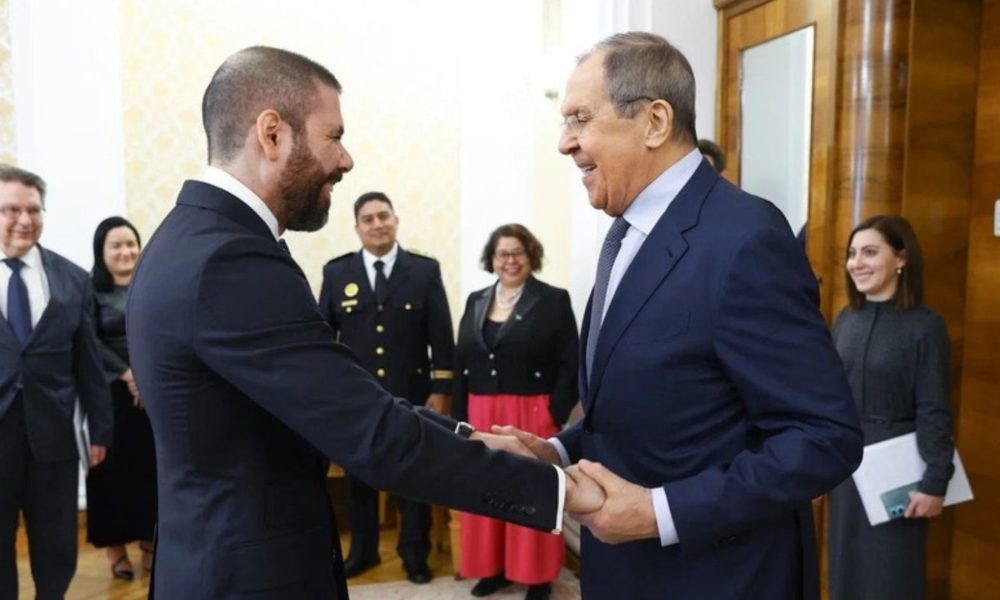
The Ortega dictatorship announced on April 22nd that it signed a declaration agreement to «counteract» the sanctions imposed by the United States against Russia and Nicaragua. The agreement also reaffirms cooperation and mutual support in many fields, primarily in security matters.
The declaration was signed by Laureano Ortega Murillo, son of the dictatorial couple and presidential advisor for investments, trade, and international cooperation. Ortega Murillo also serves as the special representative of dictator Daniel Ortega for affairs with Russia. On behalf of Moscow, the agreement was signed by their Foreign Minister, Sergei Lavrov.
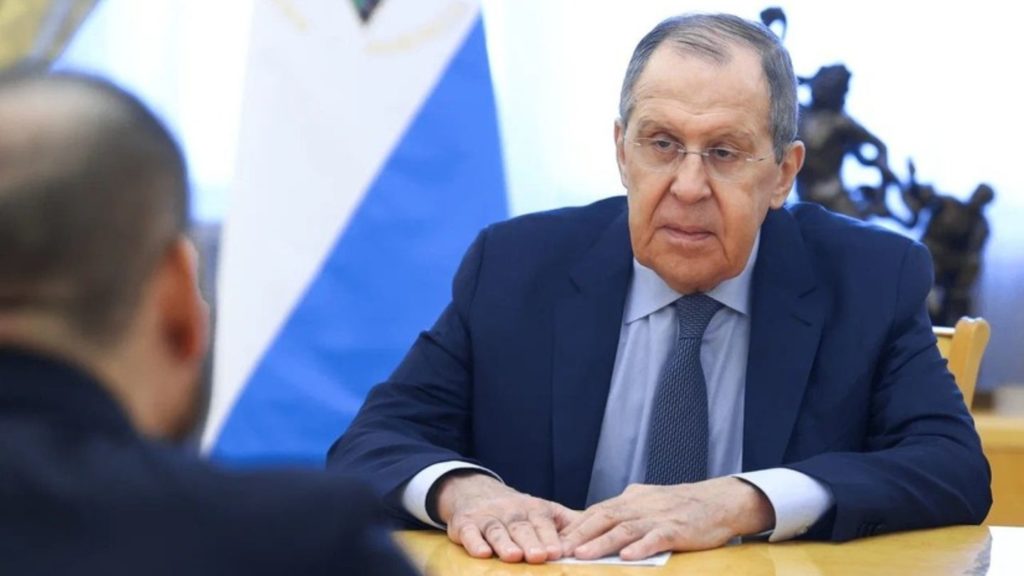
On Tuesday, April 23rd, the spokesperson for the dictatorship, Ortega´s wife and vice-president, Rosario Murillo, stated that through bilateral meetings with Russia, they have «reconfirmed» mutual support in all fields, primarily in security matters.
«There are bilateral meetings held by our delegation in Saint Petersburg; there is Comrade Laureano (Ortega), General Commissioner Zhukov Serrano, Deputy Director of the National Police; Colonel Álvaro Martín Peña Núñez, Deputy Head of the Information Directorate for the Defense of the Nicaraguan Army, and the Deputy Director General of the Nicaraguan Institute of Telecommunications and Mail (Telcor), Comrade Celia Reyes, as well as, of course, the comrade Alba Azucena Torres, who is the ambassador of our people and government to the Russian Federation,» mentioned Murillo.
She urges countries not to apply sanctions
The declaration states that unilateral measures by a third state, association, or group, in reference to sanctions, should neither be applied nor recognized. It also «strongly urges» other states to refrain from adopting, enacting, and implementing sanctions.
«Any foreign judgment arising from the application of national laws, orders, and regulations imposing unilateral coercive measures on other states should not be recognized or enforced by national courts,» the declaration states.
According to the Costa Rican academic and international relations specialist, Carlos Humberto Cascante, the declaration aims to create a new bloc where sanctions are not applied.
«It seeks to create an alternative bloc to the Western bloc where sanctions are not applied. It’s more of a narrative than something with real substance because these kinds of things (the construction of the bloc) have been happening for a while now, like the approach with China and seeking mechanisms to evade sanctions. They will work together to persuade other states not to apply sanctions,» Cascante told LA PRENSA.
Speech to Prevent Further Sanctions
According to Cascante’s assessment, the declaration does not acknowledge that Russia and Nicaragua are two countries under sanctions from the United States, each with different characteristics.
«Nicaragua has faced sanction that have been linked to regime figures. In the case of Russia, it’s completely different because it has more sanctions targeting institutions, individuals, and companies, so these are distinct cases,» he noted.
Cascante asserted that the message of this declaration is aimed at countries that have not imposed sanctions against both nations.
«These messages are directed towards those countries that have chosen not to impose sanctions, rather than those that have. It’s a kind of legitimization for these narratives towards countries that are not part of the (western) bloc that has imposed sanctions on them,» he stated.
«Protecting themselves» from confiscations
The declaration aims to «create protection» for Russia and the Ortega regime to prevent the confiscation and freezing of assets and properties due to sanctions. However, the dictatorship promotes confiscations as a political weapon against its opponents and critics.
«State and private properties and assets, including bank accounts, bonds, real estate, as well as consular and diplomatic premises and facilities, shall be immune and shall not be subject to freezing, seizure, or any other form of confiscation or restriction arising from the implementation of unilateral coercive measures by any authority,» it states.
Additionally, it establishes that the jurisdictional immunities of States and the immunity of their assets shall be at all times observed and protected against the application of unilateral coercive measures.
Among other provisions, it stipulates that the trade of humanitarian goods and products, medicines, cultural goods, and activities shall not be hindered by transportation obstacles or affected by sanctions.
Path to «reduce» dependence on the American dollar
The declaration establishes that States should develop a roadmap to reduce dependence on international trade using national currencies that tend to be used to impose unilateral coercive measures or to sustain the monetary hegemony of a specific state over the global economy, namely the United States and the dollar.
«Efforts will be made to create regional or other types of interstate financial institutions to strengthen their bilateral and multilateral financial relationships and to eliminate unequal practices and processes that currently characterize certain global financial and development institutions,» it states.
According to a political analyst consulted under condition of anonymity —due to fear of reprisals—, this document aims to establish mechanisms independent of US intervention «to constantly confront any sanctions against totalitarian regimes,» he said.
«This is the deepening of the strategic alliance. This leads subscribers to define common objectives and commit to implementing them. Russia’s fundamental interest is to alter the world order through what they call multilateralism with a confrontational backdrop against the United States,» the analyst said.